It took this new playthrough, and probably some of the clarity present in the “new” 3D translation, to help me sort out my feelings about this part of the plot. The party heads to Troia because Golbez has demanded the Earth Crystal in exchange for Rosa’s safety.
We found out about Golbez after we cure Rosa’s illness in Kaipo. It’s clear by then that he’s seeking out the crystals for nefarious purposes. Up until Troia, everything the characters do is done with the intention to stop Golbez and prevent him from getting the crystals. Cecil’s motivations are obviously going to be shaken once Rosa is in danger—again—but it always bothered me that this was never discussed or explored. At this point, Cecil’s comrades are Cid and Tellah, a man who has sworn to avenge his daughter’s death by killing Golbez. Cecil is now setting a course for Troia to get their Earth Crystal in order to save Rosa. Does no one have any questions?
None of this is to downplay Rosa’s safety, or Cecil’s attachment to her. I would be horribly conflicted in this situation too. What always confused me is that no one seems horribly conflicted. It wasn’t until years after first playing through this sequence that I realized that what I really wanted was for someone to tell Cecil, Eleventh Doctor-style, that his girlfriend isn’t more important than the whole universe, followed by a Rory Williams-style “SHE IS TO ME.”
But that’s just part of my original issue. The thing that really bugged me as a kid/teenager is that you then get to Troia and start talking to people, and the clerics tell you that you can borrow the crystal if you’re able to retrieve it from the Dark Elf. No one mentions what Cecil plans to do with the crystal, and no one asks.
I’ve long believed that this feeds into why people reacted negatively to Rosa back in the day. I’ve long believed that this reaction was unfair. Cecil is willing to risk the security of the world to save her, and while that’s touching AF, that’s on him and not her. If we want to get into the ethical debate about whether the benefits of what he’s planning to do outweigh the cost, we need to consider that he’s the one making the decision. I remember fanpages with angsty rants implying that this somehow made Rosa a weak character. You know, since she planned the whole thing. I still believe it’s a small percentage of the fandom that made this argument, but the persistent blaming of Rosa for being kidnapped, and then for being saved at the potential cost of the safety of the world, drives me to distraction. For some reason, some people were more hellbent on blaming Rosa for other people’s actions than those people themselves.
So much this.
Back in 2007/2008, I had to spend a lot of time dismantling the BS smearing of Rosa as a character, and so much of it involved either blaming her for other characters’ actions or making her issues out to be somehow her fault and egregiously bad.
Like, people would completely disregard that she’s the badass who crossed at least a desert by herself (if not the mountains too) to get to Cecil, and badmouth her for getting sick. Or they’d ignore the fact Rosa was only captured because she was sacrificing herself so Golbez and Kain didn’t murder everyone. They’d look at that scene and act like she was a liability when in fact she was the only reason the game didn’t end with Golbez/Zeromus winning in Fabul.
Their “logic” was, as poster above says, to blame Rosa for things that other people decided to do, or for things out of her control. But then they wouldn’t use that same “logic” for things like when Leviathan sank the ship carrying everyone to Baron just to get to child Rydia.
And in all this, bountyandgrace gets at something really, really important: this is the sort of misplaced blame that happens when the audience is exclusively following a male protag and not given enough explicit cues to what’s going on with the female characters.
Properly understanding Rosa and everything she did and offered requires looking at more than just Cecil. It takes thinking about how the hell she got to Kaipo by herself, or how selfless it is of Rosa to offer herself in exchange for the lives of everyone in Fabul, things like that. When the audience doesn’t do that, you get things like the audience mistakenly blaming Rosa for Cecil’s inability to protect Fabul’s crystal in the first place.
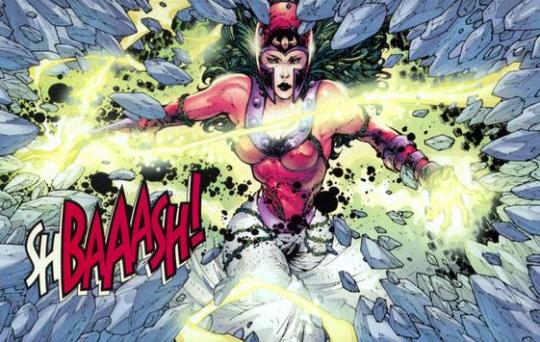
I think it’s a mix of a lot of things. One of the key cases is that Austen wasn’t beholden to the Claremont era like a lot of people are. Austen’s approach meant Lorna actually getting treated well for a change, but it also meant deviating from the way people demanded to see various characters written.
I don’t think it would be a stretch to say Austen is a lot of the reason Lorna is perceived better and has as many fans as she does today.
And yeah, there were certainly things he did that were odd or bad writing. As a Lorna fan, blaming Annie for Havok’s actions at the altar counts, but I think it’s made up for with everything else good he did for Lorna. I’ve seen Angel having sex in the open sky above tons of watching X-Men (and I think his mom?) as another one cited, and I can understand that one too.
But I think the primary cause of complaints actually boils down to “He didn’t bow down at the altar of Claremont and I don’t like that.”
In my experience, the ONLY good scene Lorna has ever had with Havok that was good for her character in any way was when he left her at the altar.
Why? Because unlike literally all the other times I’ve seen their history as a couple worked with, those scenes and that story actually looked at Lorna and actually cared about her and what she went through.
Lorna in this story may have placed the blame where it didn’t belong (on Annie), and yeah, it made Havok look like a selfish unthinking dick that should have been written with more fairness to his character. But focusing on just Lorna? This hit so many good places.
Up to this point, Lorna had lost nearly everything. She lost her family. She lost millions of lives that looked up to her and expected her to protect her. She lost most of her ability to believe in the goodness of people. She lost control of buried mental issues and gained new ones. In this setting, she was going into the wedding with Havok as someone she thought she had lost, but having recently returned and now thinking she could at least rely on him in the absence of everything else she lost.
Then he suddenly decided to leave her at the altar. In front of everyone still alive that she knew, after having prepared and thought about the day for a long time.
In this sense, the wedding wasn’t about Lorna getting hitched to a guy who’s historically led to Lorna getting written poorly and constantly undervalued by Marvel. It was about Lorna’s hope for a better and brighter future for herself and that there’s a light at the end of the tunnel of darkness she’s been going through.
So, Havok leaving her at the altar wasn’t merely losing a partner. It was shattering her dreams for a better tomorrow. Lorna being left at the altar wasn’t about the man. It was about what marrying him represented. Any man could have filled that role if she’d been in relationship with them. It just happened to be Havok.
And that’s what all other uses of Lorna that involve her history with Havok have been missing.
Havok meddling in her leadership on All-New X-Factor didn’t say anything about her leadership abilities. What it said was that Havok has more experience than her, that he’s “better” than her, and that he doesn’t believe in her or trust her abilities. It said nothing about Lorna’s actual ability to lead or what hurdles she has to overcome to be one.
Lorna beating Havok at the beginning of X-Men Blue didn’t say a thing about how strong she is. That might have been the intent, but all it really said is that Havok is so powerful and dominant and important to Lorna’s life that it’s a big deal if she somehow manages to win in a fight with him. If you swapped their roles, Havok beating Lorna would’ve meant nothing for him – because he’s already seen as “superior” to Lorna in Marvel’s eyes. Meaning Havok winning also reaffirms the idea of his superiority. No matter who wins, Lorna loses.
Lorna being used to “redeem” Havok with her memories or her influence in more recent issues of X-Men Blue once again says nothing about Lorna’s character. The excuse might have been “Lorna gets to show a compassionate side,” but that’s a paper thin cover for the fact she’s really just treated like a mix of tool and vessel for Havok’s character issues.
Marvel’s writers don’t understand how to write Lorna interacting with Havok in ways that are actually good for Lorna. Every time they try, they fail. Austen is the only exception I can ever recall seeing.




 salarta